

Blissful Kids vs Dinostaury Review: 2026 Comparison

Table of Contents
- Blissful Kids vs Dinostaury Review: Quick Comparison Table
- Blissful Kids: Structured Mindfulness Tools for Emotional Regulation
- Dinostaury: Value-Based Storytelling for Resilience and Kindness
- How to Teach Mindfulness to Kids: Which Resource Fits Your Routine?
- Best Books for Emotional Regulation in Children: Storytelling vs Activity-Based Learning
- Head-to-Head: Feature Comparison and Age-Specific Efficacy
- Implementation Time and Parental Guidance: What to Expect
- Conclusion
- Frequently Asked Questions
Last Updated: September 13, 2026
Blissful Kids vs Dinostaury Review: Quick Comparison Table
Choosing between Blissful Kids vs Dinostaury comes down to one question: does your child learn emotional skills through structured exercises or through stories? Blissful Kids leans on guided mindfulness practice, while Dinostaury builds values through narrative. This review from Discover Amazing Goods breaks down both so you can match a resource to your child's temperament, schedule, and parenting philosophy.
The deciding factor is usually how your child already absorbs new ideas. Kids who respond to instructions and repetition take to activity-based tools; kids who live inside make-believe absorb values faster when a character models them.

| Feature | Blissful Kids | Dinostaury |
|---|---|---|
| Core method | Guided mindfulness exercises | Value-based storytelling |
| Best for | Structured daily practice | Character and resilience themes |
| Format | Activities, scripts, parent guides | Illustrated storybooks |
| Age fit | Preschool through early elementary | Preschool through early elementary |
| Parent role | Facilitator and co-practitioner | Read-aloud partner |
| Pricing | Free resources, premium on request | Retail, pricing on request |
| Standout strength | Emotional regulation routines | Emotional confidence through narrative |
| Main limitation | Premium pricing not fully listed | Limited public pricing detail |
Pick Blissful Kids if you want a repeatable mindfulness routine your child can practice daily. Pick Dinostaury if your child learns values best through characters and story. Many families use both, stories at bedtime and exercises during the day.
Blissful Kids: Structured Mindfulness Tools for Emotional Regulation
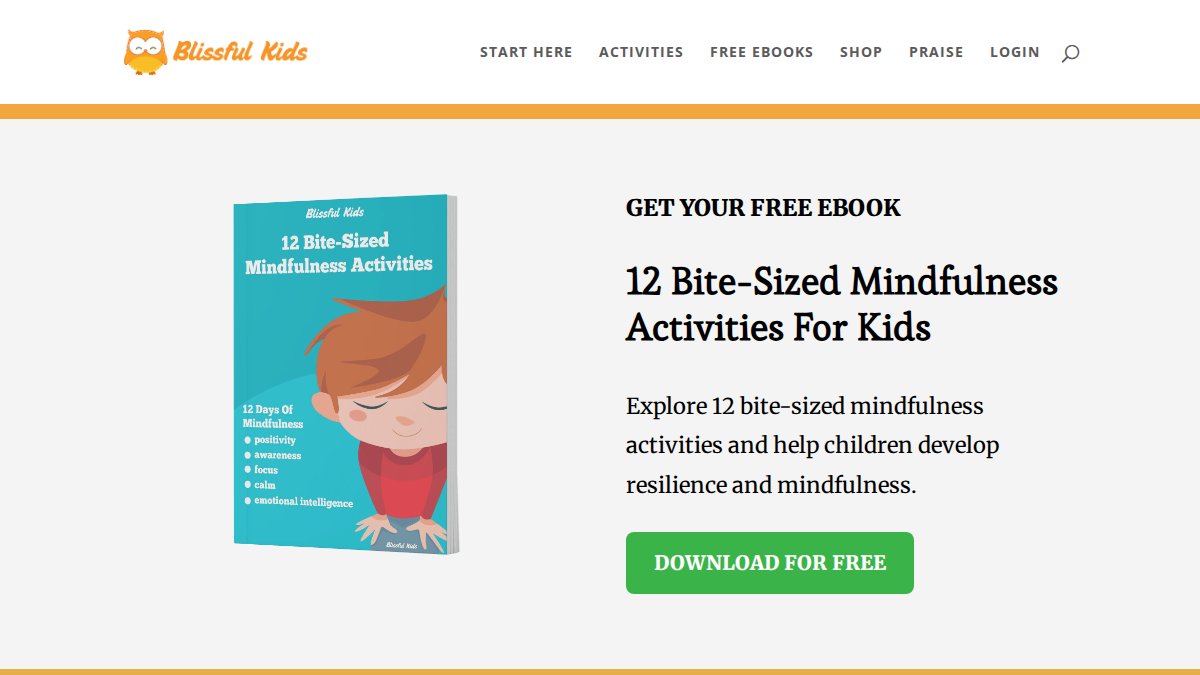
Blissful Kids is a mindfulness resource platform offering guided exercises, parent scripts, and classroom-ready activities for teaching emotional regulation and kindness. Its short, repeatable practices are why educators often call it a curriculum rather than a book collection.
The platform's strength is structure: a typical session pairs a breathing or grounding exercise with a reflection prompt, giving a child a concrete action when frustration builds. For parents who want something to do rather than read, that removes the guesswork.
Two honest limitations stand out. Premium pricing is not transparently listed for every resource, so you may need to contact the company before committing. And the approach depends on adult involvement; a five-year-old will not run a breathing exercise unprompted.
Dinostaury: Value-Based Storytelling for Resilience and Kindness
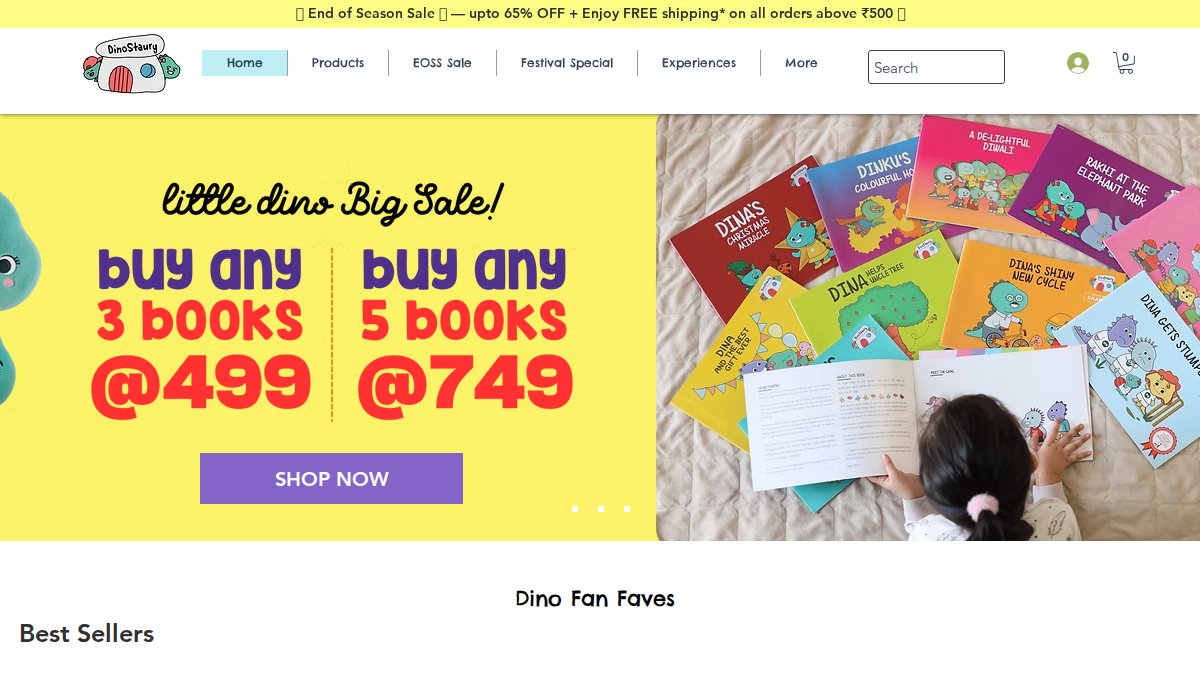
Dinostaury takes the opposite route: it teaches resilience, mindful thinking, and emotional confidence through stories. Instead of instructing a child to calm down, a book shows a character facing a setback and working through it, letting the child draw the lesson.
That distinction matters: story-based learning gives children language for feelings they cannot yet name, without the pressure of performance. A child who resists "doing exercises" will often sit happily through a story about a dinosaur who lost a friend (apa.org).
The trade-off is pacing: stories build emotional literacy over weeks, not sessions, and there is no scripted routine to fall back on during a difficult moment. Pricing is also only available on request, which makes budgeting harder.
How to Teach Mindfulness to Kids: Which Resource Fits Your Routine?
How to teach mindfulness to kids depends less on the resource and more on when you can realistically use it. It works when it attaches to something you already do daily, not when it becomes a separate project.
Match the resource to your existing rhythm:
- Bedtime wind-down: Dinostaury stories fit naturally into read-aloud time, and the values land without a lecture.
- After-school transition: Blissful Kids exercises work well as a five-minute reset between school and homework.
- Morning routine: A short breathing practice from Blissful Kids sets a calmer tone before the day starts.
- Weekend bonding: Either resource works, but stories tend to hold attention longer when siblings are involved.
A common mistake is introducing both at once. Pick one anchor moment, run it for two weeks, and add the second only once the first feels automatic.
Best Books for Emotional Regulation in Children: Storytelling vs Activity-Based Learning
The best books for emotional regulation in children are the ones a child asks for again, because repetition turns a lesson into a habit. That is the strongest argument for storytelling: kids request stories, and every re-read reinforces the same emotional vocabulary.
Activity-based learning wins on a different axis: coloring, tracing, and dot-to-dot tasks build fine motor skills and focus alongside emotional themes, and give a child something tangible to finish (naeyc.org). Many parents find that sense of completion itself calming.
Here is how the two formats compare on the things that actually affect whether a resource gets used:
| Question | Storytelling | Activity-Based |
|---|---|---|
| Will my child ask for it? | Often yes | Sometimes |
| Does it need an adult present? | Yes, for read-aloud | Less so |
| Does it build a repeatable routine? | Indirectly | Directly |
| Does it teach emotional vocabulary? | Strongly | Moderately |
| Does it occupy a restless child? | Sometimes | Usually |
For a child who needs to do something with their hands while they process a feeling, an activity book outperforms a story every time. For a child who needs to hear a feeling named out loud, the reverse is true.
Head-to-Head: Feature Comparison and Age-Specific Efficacy
Most pages ranking for this query are brand-owned and describe one approach in isolation. This section puts the two methodologies side by side on the dimensions that determine whether a family keeps using a resource past week two.
Methodology, side by side
| Dimension | Blissful Kids | Dinostaury |
|---|---|---|
| Primary mechanism | Guided practice: breath, grounding, body scan, reflection prompt | Narrative modeling: a character faces a setback and works through it |
| Skill it builds first | Emotional regulation (managing intensity in the moment) | Emotional literacy (naming and understanding feelings) |
| Delivery unit | A scripted session, usually 3-10 minutes | A story read in one sitting, usually 5-15 minutes |
| Repetition model | Same exercise repeated until it becomes automatic | Same story re-read, with new details noticed each time |
| Adult's job | Facilitator, you run the script and prompt reflection | Read-aloud partner, you read, then discuss |
| Failure mode | Exercise without reflection becomes a chore | Story without discussion becomes entertainment |
| Best evidence of success | Child uses the technique unprompted during a real frustration | Child uses the story's language to describe their own feeling |
Neither column is a ranking, they are two mechanisms aimed at two bottlenecks, and the bottleneck should drive your pick.
Age-specific efficacy: what actually changes
The generic advice is "stories for little kids, exercises for big kids." The useful version is granular:
- Ages 2-3. Attention spans are short and language is still forming. Story-based learning has the edge because a picture book holds attention through images even when the words outpace comprehension. Guided breathing is possible but usually works only as a game ("blow out the candle") rather than a formal practice.
- Ages 4-5. This is the crossover zone. Children can follow a two- or three-step instruction, which makes a short grounding exercise viable, but they still prefer make-believe (the CDC). Many families run both here, story at bedtime, one short exercise after preschool.
- Ages 6-8. Multi-step instructions, self-reflection prompts, and sitting still for a guided practice all become realistic. This is where a structured mindfulness curriculum starts to pay off, and where a child can begin connecting a story's lesson to their own behavior without heavy prompting.
- Ages 9+. Abstract reasoning arrives. Children at this stage can discuss why a character made a choice, which makes narrative-based learning richer, and they can also self-direct a practice without an adult narrating every step.
A common pattern: the resource that fits your child's current stage is the one they will use, and the one that fits the next stage is what you grow into. Buying for the next stage too early is the most frequent reason a tool sits on the shelf.
Homeschool and classroom fit
The two approaches occupy different slots in a structured day. A mindfulness exercise behaves like a lesson, start, script, end, so it slots into a scheduled block and can be logged like any subject. A story behaves like reading time, covering social-emotional learning as a byproduct of literacy work without its own slot.
If your day is already tightly blocked, the storytelling route is easier to absorb because it doubles up with reading. If you want social-emotional learning to be visible and trackable, the exercise route gives you something to point to.
Implementation Time and Parental Guidance: What to Expect
Time cost is the variable most comparison pages skip, and it decides whether a routine survives a busy week. Here is an honest breakdown of what each approach asks of the adult.
The time budget, per session
| Phase | Blissful Kids | Dinostaury |
|---|---|---|
| Prep before the first run | Read the script once so you are not learning it live, a few minutes, once per exercise | None; you can open a book cold and read it well |
| Setup each time | Find the script, settle the child, remove distractions | Grab the book, find a comfortable spot |
| Active session | Short by design, a breathing or grounding exercise plus a reflection prompt | A full read-aloud, longer if your child asks questions mid-story |
| Follow-up | Reflection prompt, a minute or two | Discussion about what the character felt and whether your child has felt that way |
| Realistic weekly total | A few short sessions, most days | A few read-alouds, most nights |
The numbers are ranges, not promises. The pattern: Blissful Kids front-loads effort into preparation and keeps sessions short; Dinostaury front-loads nothing and spends its time in the read-aloud and conversation after.
Where the hidden time goes
The prep most parents underestimate is the transition: getting a child to stop and start a structured exercise takes longer than the exercise. Story time has a built-in advantage because "one more book" is already part of most bedtime routines, so transition cost is near zero.
The hidden time on the storytelling side is the conversation. A story read straight through is entertainment; the value comes from pausing to ask what the character felt and whether your child has felt that way too. That pause is where learning happens, and the first thing skipped on a rushed night.
Parental guidance: how much is actually required
- Blissful Kids: High involvement, especially early. A young child will not run a breathing exercise unprompted, so the adult is a co-practitioner, not a supervisor. The payoff is that the child eventually internalizes the technique and can use it alone, which is the whole point of a regulation routine.
- Dinostaury: Lower mechanical involvement, higher conversational involvement. You are not facilitating a technique; you are reading and then talking. The skill you need is not instruction, it is asking good questions and then being quiet long enough for an answer.
A realistic two-week rollout
- Week one, pick one anchor moment. Bedtime for stories, or the after-school transition for exercises. Do not add a second slot yet.
- Run it four or five times. Consistency matters more than duration at this stage.
- Week two, add the follow-up. For stories, that is the discussion. For exercises, that is the reflection prompt. This is the step that converts an activity into a habit.
- Only then consider the second resource. Families who start both at once usually drop both, because the routine never becomes automatic for either.
For busy households, start with whichever resource requires less setup for your schedule, then add the other once the habit holds. Parental guidance, not the material, decides whether either approach lasts.
Conclusion
The real challenge is not picking a side in the Blissful Kids vs Dinostaury review, it is building a routine your family will actually keep. Discover Amazing Goods offers a curated selection of children’s and adult books designed to inspire learning, creativity, and mindful living. Our collection features engaging activity books, coloring books, and mindfulness journals that focus on minimalist, eco-friendly designs. We are dedicated to providing meaningful, high-quality products that spark imagination and bring joy to every reader. If you want a hands-on complement to either approach, browse the collection and add to cart to find the format that fits your child's day.
Frequently Asked Questions
What are the core differences between Blissful Kids and DinoStaury?
Blissful Kids focuses on structured mindfulness exercises and emotional regulation strategies for daily practice, while DinoStaury uses value-based storytelling to build resilience and kindness. Blissful Kids offers guided activities and parent resources; DinoStaury centers on narrative-driven books that teach character development. Your choice depends on whether your child responds better to interactive exercises or engaging stories.
How do Blissful Kids resources support emotional regulation?
Blissful Kids provides guided mindfulness exercises, breathing techniques, and activities designed to help children identify and manage emotions. These tools are structured for daily use and include parental guidance to reinforce self-regulation. The platform emphasizes emotional intelligence and kindness development, making it suitable for parents and educators seeking a consistent approach.
Does DinoStaury offer books for teaching mindfulness to children?
DinoStaury's books are not traditional mindfulness manuals; they use storytelling to nurture values, emotional intelligence, and resilience. While they may not include explicit mindfulness exercises, the narratives encourage mindful thinking and empathy. Parents looking for story-based mindfulness can use these books as conversation starters about emotions and choices.
Which brand is better for parents looking for minimalist mindfulness tools?
Blissful Kids offers a more minimalist, activity-focused approach with structured exercises, while DinoStaury provides story-driven resources that align with minimalist values through simple narratives. If you prefer hands-on tools, Blissful Kids may be a better fit. If you want to integrate mindfulness into reading time with less structured materials, DinoStaury could work well.
Are these resources suitable for homeschool environments?
Both Blissful Kids and DinoStaury can be adapted for homeschool settings. Blissful Kids provides ready-to-use mindfulness exercises and parent guides that fit into daily routines. DinoStaury's books support character building and emotional literacy through read-aloud sessions. Homeschooling parents often combine structured activities with storytelling to cover multiple learning outcomes.