

Best Minimalist Activity Books to Buy Online

Table of Contents
- What Makes an Activity Book Minimalist
- Screen-Free Activity Books for Kids That Build Focus
- Creative Activity Books for Children: Design and Content
- Minimalist Coloring Books: Styles and Formats
- Mindfulness Activity Books for Relaxation and Growth
- How to Choose the Right Activity Book for Your Age or Audience
- Where to Buy Minimalist Activity Books: Formats and Delivery
- Frequently Asked Questions
Last Updated: October 8, 2026
What Makes an Activity Book Minimalist
A minimalist activity book strips away visual clutter to focus on what matters: clean lines, plenty of white space, and purposeful design. Unlike busy activity books packed with dense illustrations and overwhelming layouts, minimalist versions let your eyes rest while your mind engages.
The minimalist design philosophy centers on simplicity and intentionality. Each element serves a purpose. No unnecessary decorations, no competing visuals fighting for attention. This approach works especially well for children who need fewer distractions and for adults seeking calm, focused activities.
What sets minimalist activity books apart is restraint. A single-line drawing of a butterfly instead of a photorealistic illustration. Open space around puzzles instead of borders and background patterns. Typography that breathes rather than crowds. At Discover Amazing Goods, we curate activity books that embrace this principle, combining clean aesthetics with engaging content that builds focus and creativity.
Minimalist design also reduces visual anxiety. Children with sensory sensitivities often find busy activity books overwhelming. The calm, uncluttered pages of minimalist books create a more welcoming experience. For adults, this simplicity becomes meditative, a break from screen-heavy days filled with pop-ups and notifications.
Screen-Free Activity Books for Kids That Build Focus
Screen-free activity books offer children an alternative to digital entertainment while naturally strengthening concentration and fine motor skills. When kids sit with a physical book, pencil in hand, they're training their brains to sustain attention without constant stimulation or notifications interrupting their flow.
The research on focus is clear: children who engage in sustained, single-task activities develop better attention spans than those constantly switching between screens. Activity books create a contained space where one task exists at a time. No tabs to click. No notifications.
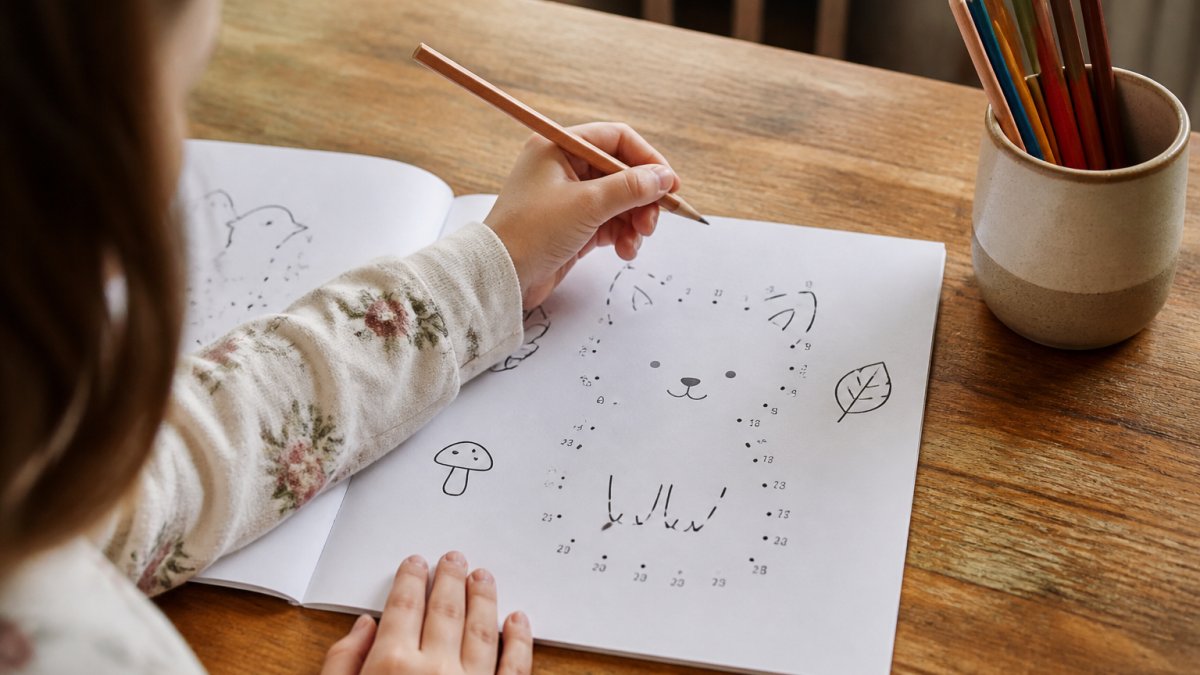
Minimalist screen-free activity books amplify this benefit. The uncluttered design removes visual distractions that might pull focus away. A child working through a dot-to-dot puzzle on a clean page has fewer competing elements demanding their attention compared to a page crowded with decorative borders and background illustrations.
Common activity types that build focus include:
- Dot-to-dot sequences that require planning ahead
- Number-by-number coloring that combines sequencing with creativity
- Mazes that demand sustained concentration
- Puzzles that reward persistence
Parents often report that children will sit with these books longer than expected. The simplicity becomes an asset, kids aren't distracted by everything around them, so they stay engaged longer. This extended focus time builds the neural pathways that support concentration in other areas, from schoolwork to reading.
Creative Activity Books for Children: Design and Content
Creative activity books for children combine artistic expression with structured guidance. The best designs balance freedom with framework, enough direction to spark ideas, enough openness to let imagination flourish.
Minimalist creative activity books achieve this balance through intentional simplicity. A page might feature one large outline waiting for color, or a series of simple shapes inviting the child to complete them.
Content variety matters. A strong creative activity book includes multiple activity types rather than repeating the same format throughout. You might find coloring pages followed by a "complete the picture" section, then a simple drawing prompt, then a sticker placement activity. This variety maintains interest while developing different creative skills.
The illustrations themselves should be clear and age-appropriate. Minimalist books often use bold, simple line work that children can easily understand. Overly detailed or realistic drawings can intimidate young artists. Simple, confident lines say "you can do this."
Quality paper makes a real difference in the creative experience. Thicker pages resist marker bleed-through and feel more substantial to handle. They also hold up better to repeated use, which matters for books that will be worked through multiple times.
At Discover Amazing Goods, we focus on activity books that inspire creativity without overwhelming young artists. The designs encourage personal expression while the minimalist approach keeps pages from feeling intimidating.
Minimalist Coloring Books: Styles and Formats
Minimalist coloring books have become popular with both children and adults seeking a calming creative outlet. The style emphasizes simple, elegant designs that invite thoughtful coloring rather than rushing through complex illustrations.
The defining characteristic of minimalist coloring books is restraint in line work and composition. Instead of intricate, detailed patterns requiring precise coloring skills, minimalist designs feature bold outlines, generous white space, and clear subject matter. A minimalist coloring page might show a single plant with simple leaves, or a geometric pattern with clean, uncomplicated shapes.
This approach benefits several audiences. Children gain confidence coloring simple, achievable designs. Adults find the activity genuinely relaxing because the simplicity removes performance pressure. There's no "right way" to color a minimalist page, the open design welcomes any color choice.
Minimalist coloring books come in several formats:
- Standard printed books offer the traditional experience: physical pages, tactile feedback, the satisfaction of turning pages as you progress
- Digital downloads provide instant access and the option to print selectively or color on-screen
- Activity cards or decks present individual designs for flexibility and portability
- Bound journals combine coloring pages with space for other activities or reflection
The choice depends on your preference and use case. Printed books work well for sustained, screen-free sessions. Digital downloads suit people who want variety without committing to a full book. Activity cards appeal to travelers or those with limited storage space.
Paper quality in printed coloring books affects the experience significantly. Thicker paper prevents marker bleed-through and allows for bolder color application. Quality matters more here than in other activity books because the coloring itself is the primary activity.
Mindfulness Activity Books for Relaxation and Growth
Mindfulness activity books combine calming activities with intentional design to support mental wellbeing and present-moment awareness. These books move beyond simple entertainment to create a deliberate practice of slowing down and focusing inward.
Effective mindfulness activity books include several activity types that support relaxation and reflection. Breathing exercise guides teach pacing and awareness. Guided visualization prompts help readers imagine peaceful scenarios. Simple yoga or stretching illustrations demonstrate poses that calm the nervous system.
The minimalist design philosophy aligns perfectly with mindfulness practice. Clutter creates mental noise. Clean, simple pages support mental clarity. When a page is uncluttered, your attention naturally settles. This supports the core practice of mindfulness: noticing what's present without distraction.
Many mindfulness activity books include space for writing or drawing responses to prompts. This combination of guided activities and personal expression helps readers internalize the practice.
For adults, mindfulness activity books offer accessible entry points to meditation and self-care practices. They work well for people who find sitting meditation challenging or who benefit from structure.
For children, these books teach emotional awareness and coping strategies early. Simple breathing exercises become tools they can use when anxious or overwhelmed. Guided visualizations help them imagine peaceful places. Over time, these practices build resilience and emotional regulation.
How to Choose the Right Activity Book for Your Age or Audience
Selecting the right activity book depends on several factors: age appropriateness, activity preference, learning goals, and personal interests.
Age and developmental stage matter most. Young children (ages 3-5) need larger images, thicker lines, and simpler activities. Dot-to-dot puzzles with fewer dots, basic coloring pages, and sticker activities work well.
Consider the activity types included. If your child loves art, prioritize coloring and drawing activities. If they enjoy logic puzzles, seek books heavy on mazes and number games.
Think about the purpose. Are you looking for educational reinforcement, creative expression, or calming downtime? Educational activity books often include learning objectives like number recognition or letter practice. Creative books emphasize self-expression.
Screen-free appeal matters for many families. If you're specifically seeking alternatives to digital entertainment, prioritize physical books and ensure they're engaging enough to compete with screens for your child's attention.
For adults, consider your goals. Do you want relaxation, creative expression, or mental stimulation? Mindfulness coloring books support relaxation. Puzzle-heavy books provide mental challenge. Art-focused books encourage creative exploration.
Quality and design quality affect usage. A beautifully designed book with appealing illustrations gets used more often than a cheaply produced one.
At Discover Amazing Goods, we help you match activity books to specific needs and ages. Our curated selection includes options for different developmental stages, activity preferences, and personal interests.
Where to Buy Minimalist Activity Books: Formats and Delivery
Minimalist activity books are available through multiple channels, each offering different advantages for availability, format options, and delivery speed.
Online retailers provide the widest selection and fastest delivery for many shoppers. Major retailers offer pocket-sized activity books. General marketplaces provide extensive options across publishers and price ranges, though selection quality varies.
Specialty publishers and direct retailers often offer curated selections focused on quality and design. These sources typically emphasize minimalist, eco-friendly, or educational approaches. Discover Amazing Goods curates activity books specifically chosen for minimalist design, creative quality, and engagement value.
Format options affect your buying decision:
- Printed books remain the most popular format, offering tactile experience and no screen time. Standard sizes work for home use. Pocket-sized versions suit travel or on-the-go activities.
- Digital downloads provide instant access and flexibility. You can print selectively, choose your own paper quality, or color on-screen. No shipping delays.
- Activity card decks offer individual designs in portable formats. These suit people wanting variety without committing to a full book.
- Bundled collections combine multiple activity types or books at better value for families buying multiple titles.
Delivery considerations vary by retailer. Delivery considerations vary by retailer. Digital downloads arrive instantly.
Pricing varies significantly based on format, page count, paper quality, and publisher. Budget-friendly options exist at lower price points. Premium, high-quality books with special paper or unique designs cost more but often justify the investment through durability and design quality.
When choosing where to buy, consider the total value: selection quality, design standards, shipping speed, return policies, and whether the retailer's curation aligns with your preferences.
Choosing the right activity book means matching design, content, and format to your specific needs. Whether you're seeking screen-free entertainment for children, creative outlets for adults, or mindfulness practices for relaxation, minimalist activity books offer purposeful alternatives to digital distraction.
At Discover Amazing Goods, we've curated a selection of activity books that prioritize clean design, engaging content, and genuine quality. Browse our curated activity books and find the perfect match for your needs, designed to inspire creativity, build focus, and bring calm into your day.
Frequently Asked Questions
What makes an activity book minimalist?
Minimalist activity books strip away clutter to focus on essential design elements. They feature clean illustrations, ample white space, and simple layouts that reduce visual overwhelm. The activities themselves, coloring, puzzles, dot-to-dot, and word searches, are presented without heavy decoration or busy backgrounds. This design approach helps readers concentrate on the task at hand, making minimalist activity books ideal for building focus and reducing screen time.
Are minimalist activity books suitable for adults?
Yes. Minimalist activity books appeal to adults seeking relaxation and creative outlets. Adult-focused titles include mindfulness journals, advanced puzzles, and sophisticated coloring designs that offer engaging, screen-free entertainment. Many adults use them for stress relief, meditation practice, or as a break from digital devices. The calming aesthetic of minimalist design makes them particularly popular with adults interested in personal development and mental wellness.
What activities are typically included in a minimalist activity book?
Common activities in minimalist books include coloring pages, dot-to-dot drawings, word searches, mazes, number recognition games, and breathing exercises. Many combine multiple activity types in one book. Mindfulness-focused titles may include guided visualizations, yoga poses, and journaling prompts. The variety keeps readers engaged without overwhelming them, and the minimalist presentation ensures each activity stands out clearly on the page.
How do I choose a minimalist activity book for my child's age?
Check the publisher's recommended age range and reading age listed on the product page. Younger children (ages 3-6) benefit from simple coloring and dot-to-dot activities with large illustrations. Elementary-age children (ages 6-10) can handle more complex puzzles and word searches. Older children and teens may prefer advanced mazes, logic puzzles, and creative design challenges. Look for books that match your child's interests, dinosaurs, vehicles, insects, to increase engagement and focus.
Why are minimalist activity books better than other options for screen-free time?
Minimalist activity books encourage deep focus and creativity without distraction. Unlike busy, overstimulating designs, their clean layouts help children concentrate longer and engage more meaningfully with each activity. The tactile experience of holding a book, using pencils or crayons, and physically completing puzzles builds fine motor skills and number recognition. Screen-free engagement also supports better sleep, reduces eye strain, and creates opportunities for family bonding time without digital interruption.