

Simple Mindfulness for Busy Parents: 7 Practical Techniques

Table of Contents
- Why Mindfulness Matters for Busy Parents
- 5-Minute Mindfulness for Parents: Quick Wins Throughout Your Day
- Mindfulness Exercises for Working Parents: Fitting Calm Into Your Schedule
- Mindful Parenting Techniques: Building Emotional Resilience With Your Kids
- Overcoming Common Obstacles to Mindfulness Practice
- Tools That Support Your Mindfulness Journey
- Start Small, Build Sustainable Habits
- Frequently Asked Questions
Last Updated: September 26, 2026
Why Mindfulness Matters for Busy Parents
Mindfulness for busy parents isn't a luxury, it's a survival tool. When your day is packed with work, school runs, and endless demands, your nervous system stays in overdrive, you react instead of respond, snap at your kids over spilled juice, and forget what calm feels like.
The good news: you don't need an hour of meditation or a silent retreat. Research shows that even brief moments of present moment awareness can shift your stress response and help you show up differently for your family. studies on mindfulness and parental stress demonstrate that parents who practice simple mindfulness techniques report lower anxiety and better emotional regulation.
At Discover Amazing Goods, we know that parents need practical tools, not perfect ones. Simple mindfulness for busy parents works because it fits into the cracks of your actual life: two breaths before responding to chaos, a body scan in the car line, a pause before yelling. These micro-practices rewire how you handle stress without overhauling your schedule.
5-Minute Mindfulness for Parents: Quick Wins Throughout Your Day
When you're busy, every minute counts. The following techniques take five minutes or less and deliver real results. You can fit them into your existing routine, no special setup required.
The Two-Breath Reset
This is the fastest tool in your toolkit. When you feel frustration rising, tension building, or reactive thoughts taking over, pause and take two intentional breaths.
Breathe in through your nose for a count of four, hold for two, exhale through your mouth for a count of four, and repeat once more.
Your nervous system recognizes the slow exhale as a safety signal, downshifting from fight-or-flight mode. The pause creates space between trigger and response, that space is where choice lives.
Use this before responding to your kid's meltdown, before a difficult conversation, or when spiraling about something you can't control. Two breaths takes 20 seconds.
Body Scan in the Car Line
Use the pickup line for a grounding technique that builds sensory awareness and pulls you out of stress-thinking.
Start at the top of your head and move down slowly, face, neck, shoulders, chest, stomach, arms, hands, legs, feet, spending 3-4 seconds on each area, observing without judgment.
Most parents discover hidden tension, clenched jaw, raised shoulders, tight stomach. Simply noticing shifts something; you can't be fully stressed and fully aware of your body simultaneously.
This practice turns dead time into a reset, leaving you calmer by pickup.
Mindful Listening with Children
This transforms your relationship with your kids. When your child talks to you, actually listen instead of planning dinner or thinking about work.
Put your phone away, make eye contact, and listen to understand rather than respond or fix. Notice tone, body language, and what they're really saying. This is present moment awareness applied to connection.
Kids feel the difference immediately, they talk more, open up more, and feel genuinely heard.
Mindfulness Exercises for Working Parents: Fitting Calm Into Your Schedule
Working parents face a unique squeeze: managing two full jobs with the time of one, caught between work's demand for connectivity and parenting's demand for presence. This collision creates specific overwhelm that generic mindfulness advice doesn't address.
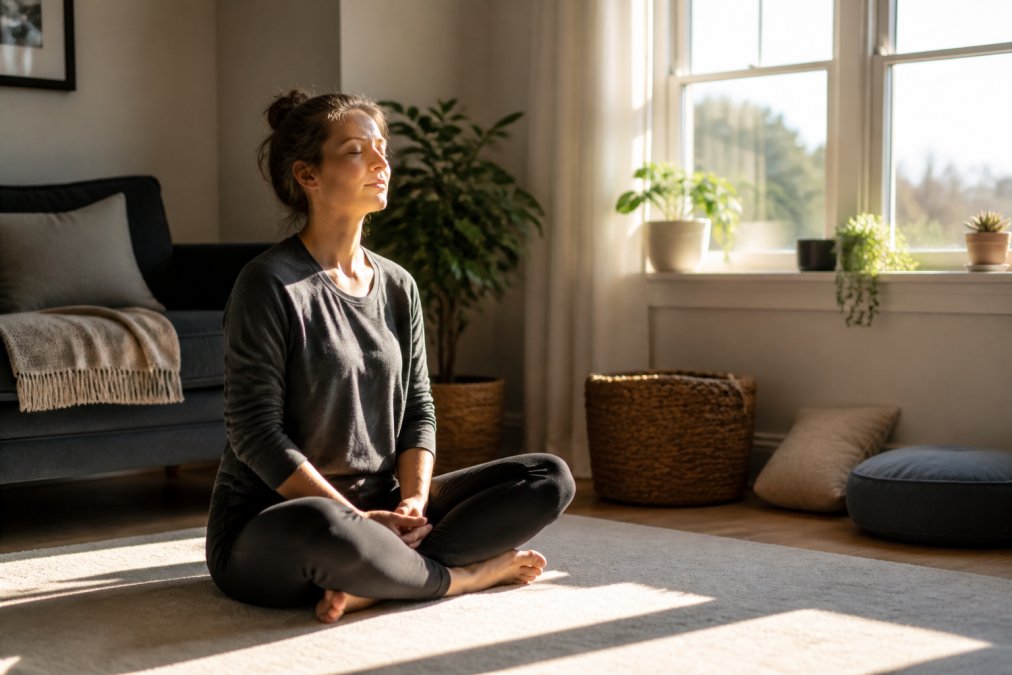
Intentional Morning Routine
Your morning sets the tone for everything that follows. Most working parents wake up already behind, rushing while mentally preparing for work, stress that compounds throughout the day.
An intentional morning means protecting 10-15 minutes before chaos starts. Wake 15 minutes earlier if needed, sit quietly with coffee, notice the silence, feel your feet on the floor, and take three slow breaths.
This is the difference between starting reactive or grounded. A grounded parent creates a calmer household.
Managing Digital Overwhelm: Mindful Phone Boundaries
Working parents face constant connectivity: Slack notifications, email alerts, texts from school, social media. Your phone is a work tool, an emergency lifeline, and a source of endless distraction and anxiety.
This creates split-attention: you can't fully be present with your kids, and you can't fully focus on work. Mindfulness for working parents means addressing this digital divide directly.
The Phone-Free Window
Create a specific window where your phone is physically away from you, not about willpower, but removing the option.
Choose one time block, perhaps 6 p.m. to 7 p.m. or the first 30 minutes after you get home, and put your phone in another room where you can't see or hear it.
Your brain's attention is pulled toward notifications even unconsciously.
Mindful Transitions Between Work and Home
- In the car (if you drive): Listen to one song you love without checking your phone. Notice the music. Feel your hands on the steering wheel. This is your decompression time.
- On public transit: Don't scroll. Look out the window. Notice your breath. Let your mind settle.
- If you work from home: Change clothes. Step outside for two minutes. Do 10 jumping jacks. Anything that marks the boundary between work-self and parent-self.
Micro-Mindfulness During Work Stress
- The 4-7-8 breath: Breathe in for 4 counts, hold for 7, exhale for 8. Do this three times. This activates your parasympathetic nervous system and is specifically designed to calm anxiety.
- Desk body scan: Sit at your desk. Quickly scan your body from head to toe. Notice where you're holding tension. Consciously relax those muscles. This takes 90 seconds and interrupts the stress cycle before you leave work.
- Mindful transition email: Before you close your laptop, write one sentence about what you're grateful for or what went well today. This shifts your brain from stress-mode to appreciation-mode.
Grounding Techniques for High-Stress Moments
High-conflict moments will happen. You need a tool that works in real time, not later when you have space to breathe.
- The 5-4-3-2-1 Sensory Technique: Name five things you see, four things you can touch, three things you hear, two things you smell, one thing you taste. This pulls you out of your stressed thoughts and into sensory reality. It takes 60-90 seconds and works anywhere.
- Cold water: Splash cold water on your face or hold ice in your hand for 10 seconds. Your nervous system recognizes this as a reset signal. Use this when you feel rage building.
- Feet on the ground: Press your feet firmly into the floor. Feel the solid ground beneath you. This simple grounding technique activates your parasympathetic nervous system and is invisible to everyone around you.
Mindful Parenting Techniques: Building Emotional Resilience With Your Kids
The goal isn't to become a zen parent who never gets frustrated, it's to respond from intention instead of reaction, and teach your kids the same skill.
Pause and Reflect Before Reacting
When your kid pushes a button, pause before responding. That pause is where everything changes.
Teaching Kids Present Moment Awareness
Introduce mindfulness to your kids in language they understand, you're teaching them to notice, not to meditate.
Overcoming Common Obstacles to Mindfulness Practice
"I don't have time." You don't need time. You need to use time differently. Two breaths while waiting for coffee. A body scan in the car. Mindful listening during a conversation you're already having. These aren't added tasks. They're shifts in how you do what you're already doing.
Tools That Support Your Mindfulness Journey
The right tools make consistency easier. Discover Amazing Goods offers mindfulness journals and activity books designed specifically for busy families. Our curated selection features minimalist, eco-friendly designs that inspire calm without adding clutter to your home.
Start Small, Build Sustainable Habits
Simple mindfulness for busy parents works because it doesn't ask you to become a different person. It asks you to be more present in the life you're already living.
Frequently Asked Questions
How can a busy parent practice mindfulness without adding another task to their plate?
Mindfulness doesn't require extra time, it works within your existing routine. Stack it onto habits you already do: practice deep breathing while your coffee brews, do a body scan during your commute, or use mindful listening during dinner with your kids. These micro-moments of present moment awareness add up without demanding a separate time block. The key is intention, not duration.
What are some 5-minute mindfulness exercises for parents that actually work?
The two-breath reset (two conscious breaths when stress peaks), body scan in the car line (mentally scan from head to toe), and mindful listening (full attention on one child for five minutes) are proven starters. Gratitude practice, naming three things you're grateful for, also shifts your nervous system quickly. Start with whichever feels most natural, then rotate through them as your practice grows.
Can mindfulness really reduce parental stress and burnout?
Yes. Mindfulness activates your parasympathetic nervous system, which counters the stress response. Regular practice builds emotional regulation and self-compassion, both critical for managing parental overwhelm. Research shows that even brief daily practice reduces reactivity and improves your ability to pause before responding to challenging moments. The shift from reactive to intentional parenting creates lasting stress relief.
How do I teach my kids mindfulness if I'm new to it myself?
Start with sensory awareness exercises: notice five things you see, four you hear, three you touch, two you smell, one you taste. Teach kids to pause and take three slow breaths when upset. Use simple language, 'feeling your feet on the ground' instead of 'grounding techniques.' Your authentic practice matters more than perfection. Kids learn by watching you pause and breathe, not by hearing you lecture about it.
Parental stress doesn't disappear. But how you respond to it can change completely. Simple mindfulness for busy parents gives you tools that fit into real life. Start with Discover Amazing Goods's mindfulness journals and activity books, designed for families who want to build calm without complexity. Our eco-friendly, minimalist designs inspire focus and presence. Add to cart and begin your practice today.