

Why Cognitive Health Is Important for Aging

Table of Contents
- Why Cognitive Health Is Important for Aging: Independence, Function, and Daily Life
- Normal Memory Changes With Age vs. Signs of Concern
- Risk Factors for Cognitive Decline and What You Can Influence
- Ways to Improve Cognitive Health Through Daily Habits
- Activities for Brain Health in Seniors: Puzzles, Learning, and Social Connection
- Learning and the Aging Brain: How New Skills Build Cognitive Reserve
- Building a Realistic, Measurable Cognitive Health Action Plan
- Frequently Asked Questions
Last Updated: October 6, 2026
Why Cognitive Health Is Important for Aging: Independence, Function, and Daily Life
Cognitive health is the ability to think clearly, learn, remember, and make everyday decisions, and it shapes nearly everything about how we age. The National Institute on Aging's cognitive health overview describes cognitive health as one of the most important components of overall well-being in later life.
Here is the part most guides get wrong. They treat cognitive health as a memory contest, when it is really about function: paying bills, driving safely, following a recipe, holding a conversation.
The CDC's Healthy Aging program frames healthy aging around maintaining function and independence, not simply avoiding disease. That reframing changes what you actually do about it.
Normal Memory Changes With Age vs. Signs of Concern
Typical aging brings slower processing speed and occasional word-finding trouble, while dementia involves changes severe enough to disrupt daily functioning. The distinction matters because most older adults worry about the wrong thing.
What Counts as Typical Aging
Normal aging looks like walking into a room and forgetting why, or needing a moment to recall a name that surfaces later. Processing speed, attention, and reasoning slow gradually. These changes are annoying, not disabling.
Normal aging is the gradual, mild decline in processing speed and recall that does not interfere with independence. A common mistake is measuring yourself against your 30-year-old baseline instead of against people your own age.
When to Talk to a Doctor
Talk to a doctor when changes interfere with daily functioning: missed medications, unpaid bills, getting lost on familiar routes, or repeated questions within minutes. Treatable contributors like medication side effects, hearing loss, vision problems, sleep disorders, and thyroid issues can mimic cognitive decline, so a clinical evaluation comes first.
Risk Factors for Cognitive Decline and What You Can Influence
Risk factors for cognitive decline split into two piles: those you cannot move and those you can. Age and family history sit in the first pile.
The Alzheimer's Association's risk factor research separates modifiable from non-modifiable factors, and the modifiable list is longer than most people expect. The National Institute on Aging's cognitive health overview makes the same point from a research angle: midlife vascular health appears to shape late-life brain outcomes more than any single late-life intervention.
What the Evidence Actually Supports
Not every risk-reduction claim deserves equal weight. It helps to sort them into tiers.
Promising but not proven. Mediterranean-style eating patterns, consistent sleep duration, and lifelong learning show favorable associations but weaker causal evidence. They are reasonable to adopt; they are not guarantees.
Emerging or uncertain. Most commercial brain-training programs, standalone supplements (including omega-3, curcumin, and ginkgo), and hormone therapies marketed for cognition have not held up in rigorous trials.
Treatable Contributors Most People Miss
Some things that look like cognitive decline are actually reversible or manageable once identified. These deserve a clinical workup before anyone assumes the worst.
- Medication side effects and interactions. Anticholinergics, sedatives, and certain blood pressure drugs can dull thinking. A medication review is often the first step.
- Hearing loss. Untreated hearing loss is one of the strongest modifiable midlife risk factors for later cognitive decline. Hearing aids do not just improve conversation; they reduce cognitive load and social withdrawal.
- Vision problems. Cataracts and uncorrected refractive error reduce stimulation and increase fall risk, which in turn affects brain health.
- Sleep disorders. Untreated sleep apnea is associated with memory problems and higher dementia risk. It is diagnosable and treatable.
- Depression and anxiety. Mood disorders can mimic cognitive impairment and are treatable. So can thyroid disease, vitamin B12 deficiency, and uncontrolled pain.
A Practical Way to Think About Your Own Risk
You do not need a risk score to act. A reasonable approach is to pick the two or three modifiable factors where you have the most room to move, usually blood pressure, activity, sleep, or social contact, and treat them as the priority for the next six months. Reassess with your clinician at your next visit rather than trying to overhaul everything at once.
| Factor | Can You Change It? | Evidence Strength | Practical Lever |
|---|---|---|---|
| Age and genetics | No | , | Focus screening and monitoring here |
| Blood pressure | Yes | Well-supported | Monitor and treat with your doctor |
| Diabetes control | Yes | Well-supported | Manage blood sugar consistently |
| Physical activity | Yes | Well-supported | Aim for regular movement most days |
| Hearing loss | Yes | Well-supported | Get hearing checked and treated |
| Social isolation | Yes | Well-supported | Schedule recurring contact weekly |
| Sleep quality and apnea | Yes | Promising | Screen for apnea; keep consistent hours |
| Diet pattern | Yes | Promising | Favor vegetables, whole grains, healthy fats |
| Commercial brain games | Yes | Emerging/uncertain | Enjoy them, but do not rely on them |
| Cognitive supplements | Yes | Emerging/uncertain | Discuss with a clinician before spending |
Ways to Improve Cognitive Health Through Daily Habits
The habits that support cognitive function are unglamorous and repeatable. Regular exercise, a healthy diet, consistent sleep, and mental stimulation do more than any single supplement. Many clinicians treat physical activity as the closest thing to a broad-spectrum intervention available.
- Move your body most days, mixing aerobic activity with strength work.
- Protect sleep by keeping consistent bed and wake times.
- Eat a diet rich in vegetables, whole grains, and healthy fats.
- Stay socially engaged through recurring commitments, not occasional calls.
- Challenge your thinking with new and varied cognitive tasks.
- Manage chronic conditions with your care team rather than in isolation.
Activities for Brain Health in Seniors: Puzzles, Learning, and Social Connection
Most articles on this topic list activities and stop there. The more useful question is which activities actually do something for the aging brain, and how you would know. That is the angle this section takes: a practical guide to choosing, structuring, and evaluating cognitive activities without overstating what they can do.
What the Research Suggests (and What It Does Not)
Cognitive engagement is associated with better late-life cognition, but the evidence is uneven. Observational studies link mentally stimulating activities, reading, puzzles, games, crafts, social groups, with slower cognitive decline. Randomized trials of specific brain-training programs, however, tend to show gains on the trained task that do not transfer broadly to everyday function.
What does appear to matter is the combination of novelty, challenge, and social context. A puzzle done alone is stimulation.
Choosing Activities That Fit the Evidence
A useful way to sort activities is by how much they combine mental demand, physical demand, and social contact. The more of those three a single activity hits, the more efficient your time is.
| Activity | Mental Demand | Physical Demand | Social Contact |
|---|---|---|---|
| Solo crossword or word search | Moderate | Low | None |
| Group book club | Moderate | Low | High |
| Dance class | Moderate | High | High |
| Learning a language | High | Low | Variable |
| Walking group | Low | Moderate | High |
| Musical instrument | High | Low | Variable |
| Volunteering | Moderate | Variable | High |
A balanced week might include one high-novelty activity (a new skill), one high-social activity (a group), and one physical activity that also involves thinking (dance, tennis, hiking with a group).
How to Tell If It Is Working
You cannot measure your own cognition reliably, and you should not try. What you can track are proxies: are you attending the class, are you progressing on the skill, are you seeing people, are you sleeping and moving. If those are stable or improving, the routine is doing its job. If you notice functional changes, missed medications, getting lost, repeating questions, that is a clinical question, not an activity question.
A Note on Products and Programs
Puzzle books, activity books, and cognitive-training apps are tools, not treatments. The National Institute on Aging's cognitive health overview is a good starting point for what the research does and does not support.
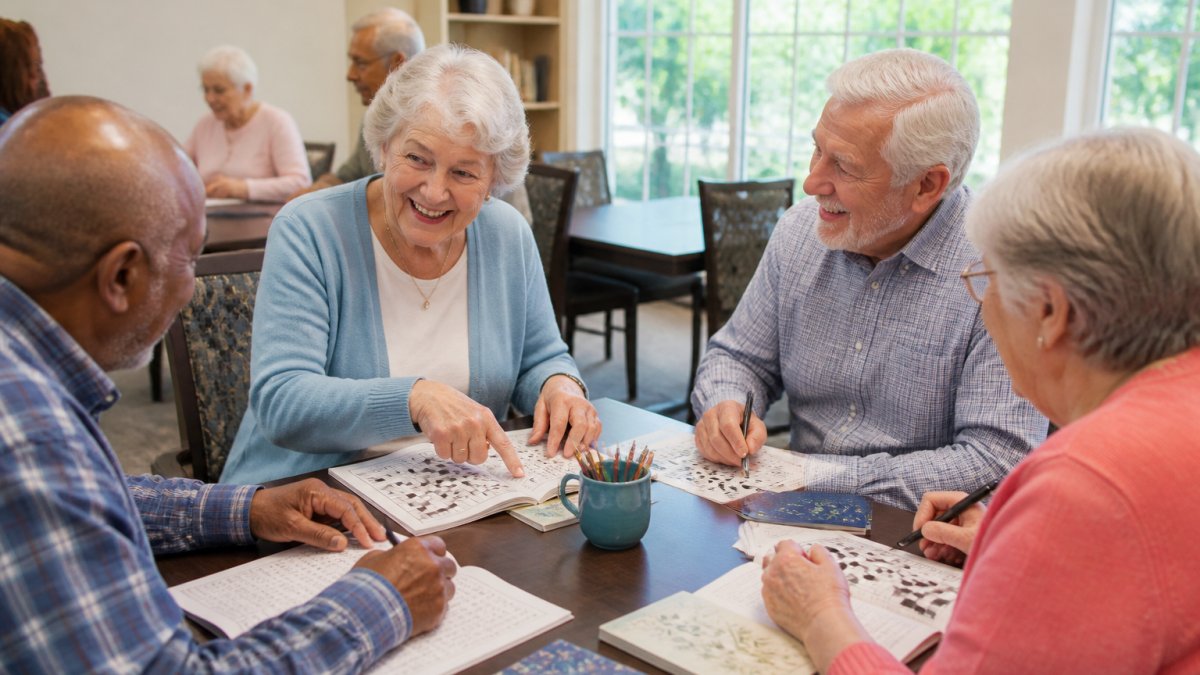
Learning and the Aging Brain: How New Skills Build Cognitive Reserve
The aging brain retains neuroplasticity, meaning it keeps rewiring itself in response to new demands. Cognitive reserve is the brain's ability to keep functioning well despite age-related change, and lifelong learning builds it. This is the most encouraging finding in the field: it is never too late to add to the reserve you have.
Novelty drives the effect. Repeating mastered tasks maintains skills, while learning something unfamiliar, a language, an instrument, a craft, stresses the brain in the way that builds adaptability.
Building a Realistic, Measurable Cognitive Health Action Plan
A plan you abandon in three weeks is worth less than a modest plan you keep for a year. Build around three or four habits, track them simply, and review monthly.
| Habit | Target Frequency | How to Track It |
|---|---|---|
| Physical activity | Most days | Check off each session |
| New learning | 3 times weekly | Log the skill or topic |
| Social engagement | Weekly minimum | Calendar recurring events |
| Sleep consistency | Nightly | Note bed and wake times |
If you want a low-friction starting point, puzzle and activity books can give you a structured daily mental task that doubles as screen-free downtime.
Cognitive health is not a guarantee against aging, and no habit eliminates risk. What you control is the trajectory: how well you function, how long you stay independent, and how much you enjoy the years ahead.
Frequently Asked Questions
Why is cognitive health important as you age?
Cognitive health affects how well you handle daily tasks like managing medications, paying bills, driving, and holding conversations. When thinking skills stay sharp, older adults keep more independence and a better quality of life. Research on healthy aging shows that cognitive function, physical health, and social engagement reinforce each other. Protecting your brain is not just about avoiding dementia; it is about preserving the abilities that let you live on your own terms for as long as possible.
What cognitive changes are normal with aging?
Normal memory changes with age include slower processing speed, occasional difficulty finding a word, and needing more time to learn new routines. These shifts are common and usually do not disrupt daily functioning. Warning signs that deserve a doctor's evaluation include getting lost in familiar places, repeating the same question within minutes, struggling to manage finances, or having trouble with tasks that were once automatic. A physician can help distinguish typical aging from something that needs attention.
How can older adults support cognitive health?
Ways to improve cognitive health include regular physical activity, a balanced diet rich in vegetables and healthy fats, quality sleep, social engagement, and mentally stimulating activities. Managing chronic health conditions like high blood pressure and diabetes also matters because vascular health supports brain health. Learning new skills, whether a language, a musical instrument, or a craft, builds cognitive reserve. Small consistent habits tend to work better than occasional intense efforts, so pick two or three changes you can sustain.
Can learning new things help maintain cognitive health?
Yes. Learning and the aging brain are closely linked. When you take on a new skill, your brain forms new neural connections, a process called neuroplasticity. This builds cognitive reserve, which helps the brain adapt and compensate as it ages. Activities like taking a class, learning a new card game, or picking up a hobby you have never tried before challenge your thinking skills in ways that routine tasks do not. The key is choosing something genuinely new and sticking with it long enough to see progress.